Soft Washing vs. Pressure Washing: What Is the Difference?
Most homeowners use “pressure washing” as the name for every kind of exterior cleaning, and we get why. It is the name everybody knows. But when we pull up to a house in Baton Rouge, the first decision we make is which of two very different methods each surface gets: pressure washing or soft washing. Pick the wrong one and you either leave the surface dirty or you damage it. Here is how the two methods work, where each one belongs, and how to tell which one your home needs.
The Short Answer
Pressure washing cleans with force. High pressure water does the work, blasting dirt, grime, and stains off hard surfaces like concrete. Soft washing cleans with chemistry. A cleaning solution is applied at low pressure, given time to kill algae, mold, and mildew at the root, and then rinsed away gently. Pressure washing is for hard, durable surfaces. Soft washing is for everything that high pressure can hurt, which includes your roof and your siding.
What Is Pressure Washing?
Pressure washing uses a pump to push water out at high pressure, measured in PSI (pounds per square inch). That force is the cleaning agent. It is the right tool when the surface is harder than the dirt stuck to it, because the water can knock the grime loose without hurting what is underneath.
On a typical job we use pressure, usually through a surface cleaner (a rotating spray bar that keeps the pressure even), on:
- Concrete driveways, sidewalks, and patios
- Brick pavers and hard masonry
- Commercial flatwork like parking lots and walkways
- Dumpster pads and other heavily stained concrete
Those surfaces can take the force, and they need it. Ground-in dirt, tire marks, and years of buildup in the pores of concrete do not come out with a gentle rinse. If you want the full picture of that side of the work, see our concrete cleaning page.
What Is Soft Washing?
Soft washing flips the approach. The water pressure stays low, not much more than a garden hose, and a detergent solution does the real work. The solution is sprayed on, allowed to dwell, and it kills the organic growth (the algae, mold, and mildew that turn Baton Rouge homes green and roofs black) at the root instead of just knocking the top off of it. Then everything rinses away at low pressure.
Soft washing is the method for:
- Roof shingles, and metal and tile roofs
- Vinyl, Hardie board, and painted siding
- Stucco
- Window screens and lanais
- Wood fences and decks, in most cases
This is the process we use on every house wash and every roof cleaning. If you want the deeper dive on the method itself, our soft washing page covers it, and our post on the benefits of soft washing your roof explains what it does for shingles specifically.
How We Soft Wash With a Pressure Washer
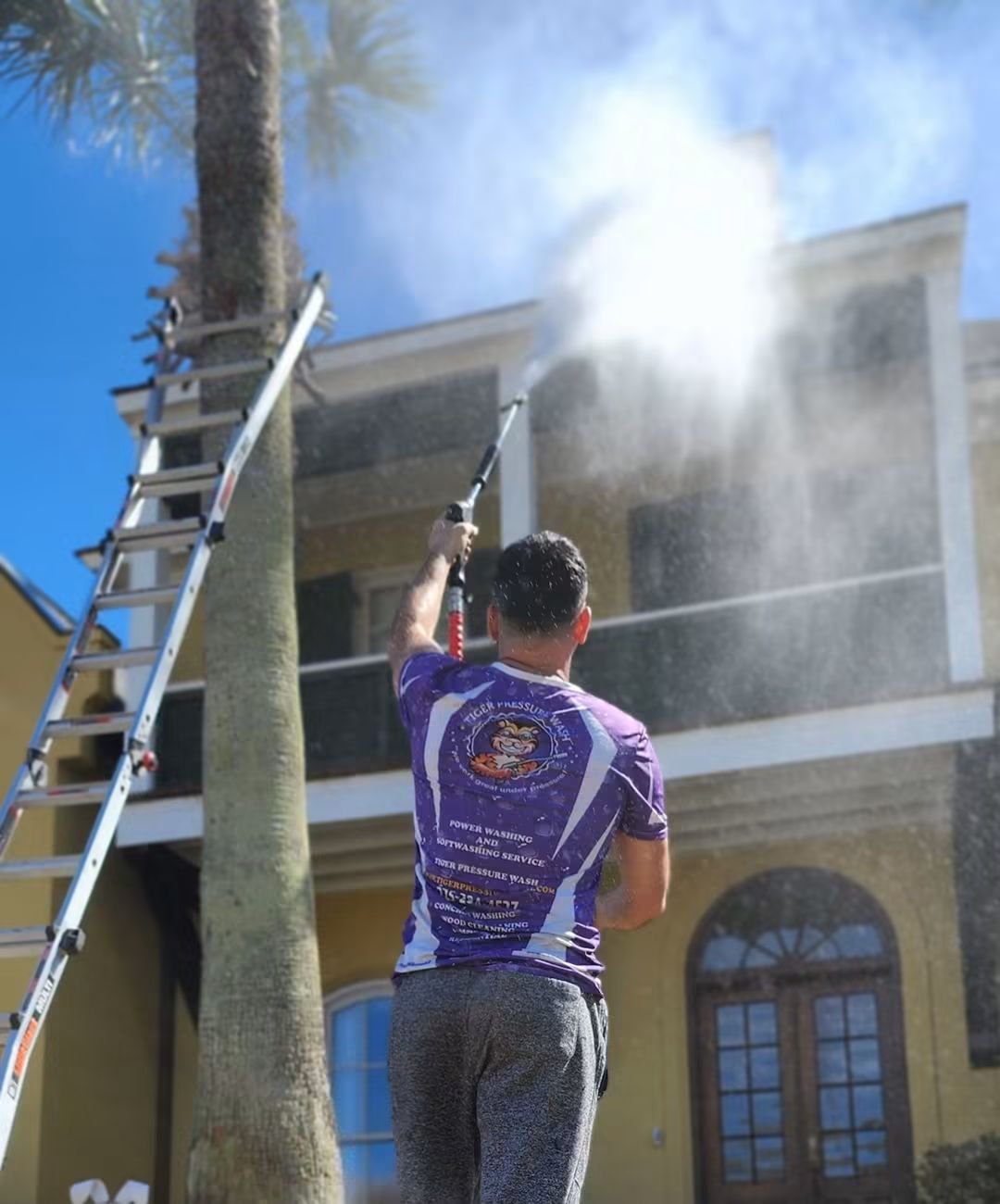
Here is the part that surprises people. A lot of the time, when we soft wash a house, we are still using a pressure washer, just not the way most people picture it. We run it with oversized tips that drop the pressure down extremely low, so what comes out is a high volume, low pressure stream. You could put your hand right in front of it and it would not hurt you. The machine is just the delivery system that gets the cleaning solution onto the house evenly. The solution does the work, not the pressure.
Other times, the job calls for a different setup, and we apply the solution with a 12 volt pump system instead. Same idea either way: low pressure going on, the cleaning solution doing the work, and a gentle rinse coming off. What matters is never which machine is on the truck. It is keeping the pressure low and letting the solution kill the growth at the root.
What Happens When You Use the Wrong One?
This is the part that matters most, because the damage from high pressure on the wrong surface does not always show up the same day.
On a roof, high pressure strips the protective granules off asphalt shingles. Those granules are the shingle’s armor against the sun. Lose them and the roof ages years in one afternoon, and most shingle manufacturers recommend against high pressure cleaning for exactly this reason. On vinyl siding, high pressure can crack panels and drive water up and behind them, where it sits against your sheathing. On stucco and painted surfaces it can blast the finish right off. On wood it leaves those fuzzy, splintered grooves you can feel with your hand. Even concrete can be scarred by a wand held too close, leaving permanent stripes.
The flip side is real too. Soft washing a filthy driveway will disappoint you. The solution kills growth, but it cannot lift years of ground-in dirt and tire marks out of concrete pores. That job needs pressure. Neither method is “better.” They are different tools, and a good cleaning company carries both and knows which one each surface gets.
The In-Between Cases
A few surfaces sit in the gray area, and this is where experience earns its keep.
Brick. Hard, modern brick in good shape can handle controlled pressure. Old brick with soft or crumbling mortar cannot, and it gets a soft wash or a very careful low pressure rinse. The mortar matters more than the brick.
Oil and grease stains. Neither method alone fixes an oil stain on a driveway. The stain has to be treated with a degreaser first, then pressure does the lifting. Blasting raw oil with pressure and no treatment mostly pushes it deeper.
Rust and red clay stains. Those are chemistry problems, not pressure problems. They need a specific treatment, and more pressure just risks the surface underneath.
Why Soft Washing Lasts Longer
Here is the difference Baton Rouge homeowners feel in their wallets. When you blast algae off siding with high pressure, you remove what you can see, but you leave the roots and spores behind in the surface. In our humidity, that growth is back in a few months. Soft washing kills the growth at the root, so the clean lasts longer, commonly two to three times longer than a pressure-only wash on the same surface. Around here, where heat, shade, and rain grow algae on everything, killing the growth is the whole game. It is also why most homes here need a wash about once a year, which we covered in our post on how often Baton Rouge homes should be pressure washed.
So Which One Does Your Home Need?
Most homes need both, on the same visit. The house and roof get soft washed, the driveway and walkways get pressure washed, and the whole property comes out looking right without anything getting beat up in the process. That combination is exactly what most of our customers end up booking.
If you are not sure what your surfaces need, that is what the free quote is for. Call or text us at (225) 284-4527 and we will walk the property, tell you plainly which method each surface gets and why, and give you a real price. No pressure, pun fully intended.